
If you have spent any time reading vitamin C serum reviews, you have probably seen these two brands come up together. CeraVe and La Roche-Posay are both owned by L'Oreal, they both offer a 10% L-ascorbic acid formula at a price most people can justify, and they are both consistently recommended by dermatologists. So the obvious question is whether they are essentially the same product, or whether the differences in formula actually matter for your skin. I have used both. The short answer is that they are not the same, and for most people buying from Amazon today, CeraVe is the more practical choice.
That said, La Roche-Posay is a genuinely good product that will work better for a specific subset of users. This comparison exists to help you figure out which side of that line you fall on, rather than just defaulting to the one with more Amazon reviews.
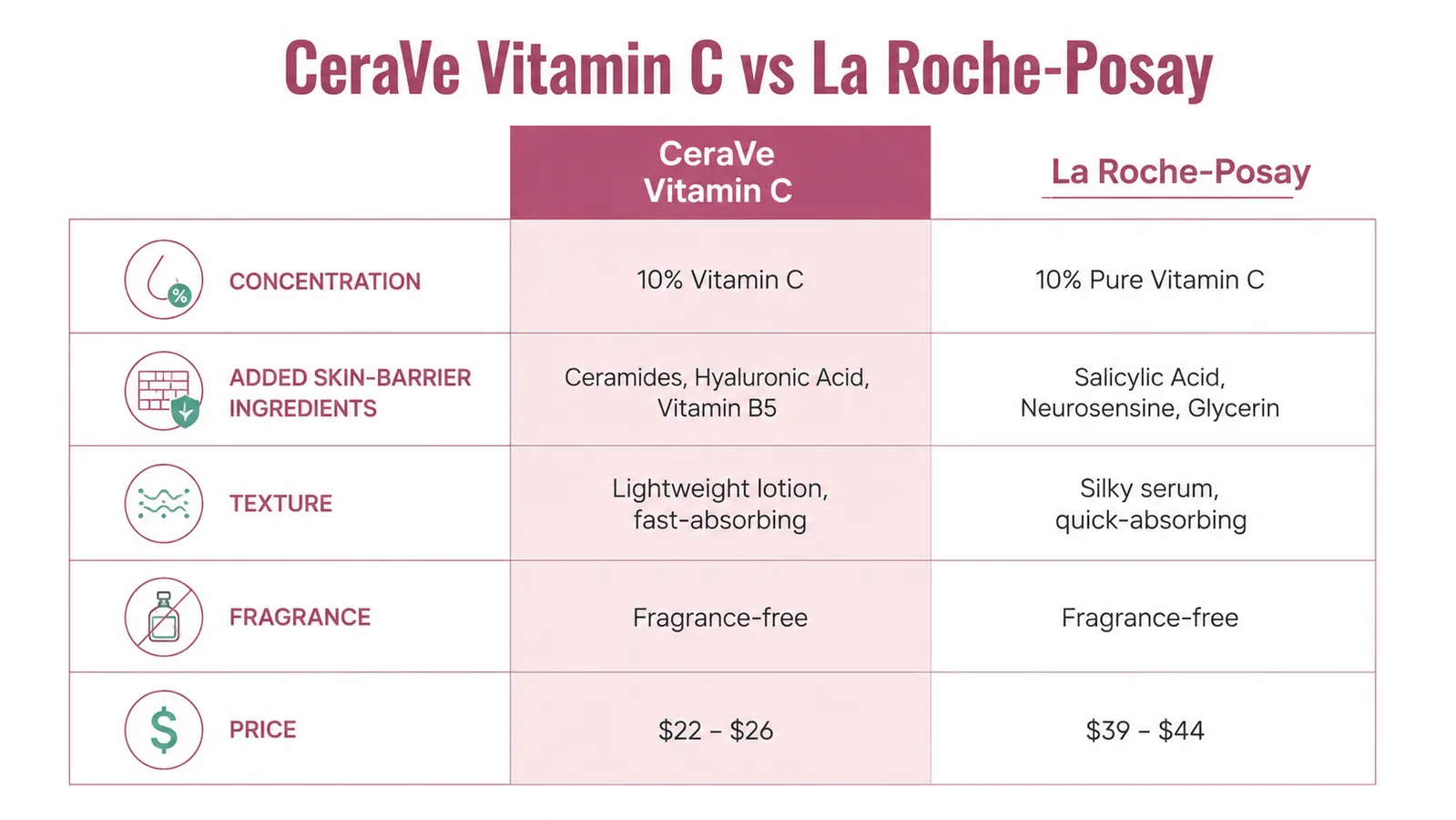
| Feature | CeraVe Vitamin C Serum | La Roche-Posay 10% Pure Vitamin C |
|---|---|---|
| Vitamin C Concentration | 10% L-ascorbic acid | 10% L-ascorbic acid |
| Added Skin-Barrier Ingredients | 3 ceramides + hyaluronic acid | Salicylic acid (0.5%) + neurosensine peptide |
| Texture | Lightweight gel-serum, absorbs quickly | Watery-thin, spreads very fast |
| Fragrance | Fragrance-free | Fragrance-free |
| Packaging | Pump bottle with opaque housing | Dropper bottle, partially opaque |
| Best For | Normal, dry, sensitive, combination skin | Oily, acne-prone, or breakout-prone skin |
| Amazon Reviews | 43,622 ratings, 4.5 stars | N/A (not linked) |
| Typical Price | Around $24 | Around $42 |
| Affiliate Link | Available on Amazon | Not linked here |
Where CeraVe Wins
The ceramide and hyaluronic acid addition in the CeraVe formula is not window dressing. Ceramides are the lipids your skin barrier is literally built from, and a vitamin C serum that supports barrier integrity while brightening is a more complete product than one that only targets pigment. This matters most if your skin ever feels tight after cleansing, if you cycle in retinol or exfoliating acids elsewhere in your routine, or if you live somewhere with cold winters. Vitamin C itself can be slightly drying in some formulas, and the hyaluronic acid here counteracts that tendency enough that I have never needed to adjust my moisturizer on days I use it.
Price is also a real factor. At roughly half the cost of La Roche-Posay, the CeraVe serum removes the math problem that causes people to ration expensive serums and use them less consistently than they should. Vitamin C fades dark spots and supports collagen through cumulative daily use. If a lower price point means you actually pump it out every morning instead of saving it for special occasions, that is a meaningful practical advantage. The 43,622 Amazon reviews at 4.5 stars reflect that this formula performs consistently for a wide range of skin types, not just a narrow demographic.
If you have normal, dry, or sensitive skin, this is the one I would reach for.
CeraVe's 10% vitamin C is paired with ceramides and hyaluronic acid, so it brightens without stripping. Over 43,000 Amazon reviews support what I have seen in my own testing.
Amazon Check Today's Price on Amazon →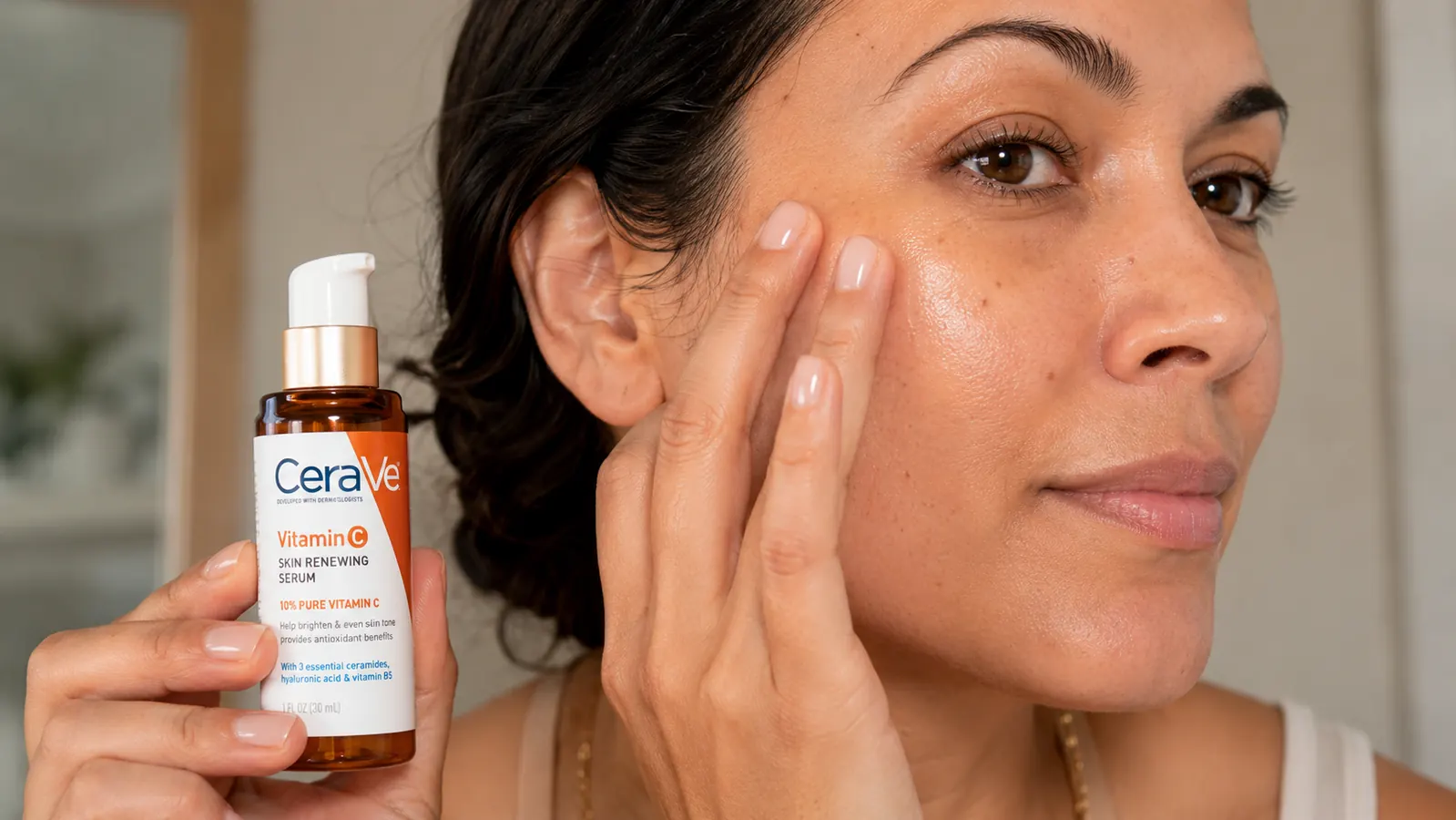
Where La Roche-Posay Wins
La Roche-Posay's 10% Pure Vitamin C formula adds 0.5% salicylic acid, a beta-hydroxy acid that exfoliates the pore lining and helps prevent congestion. For someone with oily or acne-prone skin, that combination in a single step is genuinely useful. The texture is also notably thinner, which means it disappears on skin faster and does not add any perceptible weight under sunscreen or foundation. If you tend to layer multiple serums or if anything slightly film-forming makes your skin look greasy by mid-morning, La Roche-Posay's watery consistency has an edge.
The neurosensine peptide included in La Roche-Posay's formula is also worth mentioning. It is a synthetic ingredient designed to calm nerve endings associated with skin sensitivity and redness. For someone dealing with both redness and dullness, that is a targeted addition. The tradeoff is the price point, which is real, and the fact that salicylic acid makes the formula less suitable for dry or already-sensitized skin where additional exfoliation can tip into irritation.
Vitamin C fades dark spots through cumulative daily use. A lower price point that gets you to actually use it every morning is a real advantage, not a marketing angle.
Texture and Application Side by Side
The CeraVe serum has a pale yellow tint that is normal for L-ascorbic acid formulas. Its consistency sits between a gel and a liquid, just thick enough to stay where you put it while you spread it. I use three to four drops for my full face and neck, and it absorbs without tackiness in under a minute. The pump packaging keeps the formula from oxidizing as quickly as dropper bottles can when exposed to light and air regularly.
La Roche-Posay is noticeably more watery. The dropper is fine for dosing but requires slightly more care to avoid waste, and the bottle is only partially opaque. On skin it feels more like water than serum for the first thirty seconds. There is no tackiness whatsoever. For people who have strong texture preferences or who dislike any weight on skin, this is genuinely preferable. For people layering it under a separate moisturizer with ceramides or fatty acids, the difference is largely irrelevant since you are adding barrier support through a different product anyway.
Brightening and Dark Spot Performance
Both serums use the same 10% L-ascorbic acid concentration, which is the active ingredient actually responsible for brightening, inhibiting melanin production, and supporting collagen synthesis. From a formulation standpoint, the active work being done is identical. What differs is the supporting cast and how those support ingredients interact with your specific skin.
In my own testing over six weeks with the CeraVe serum on sun spots and post-acne marks on my forehead, I saw visible lightening of two distinct spots by week five. That matches the general research timeline for L-ascorbic acid, which requires four to eight weeks of consistent daily morning use before results become clear. If you are starting either serum hoping to see change in one or two weeks, you will be disappointed by both. The consistent daily use is what moves the needle, and for reasons I mentioned earlier, the CeraVe pricing makes that consistency more attainable for most people. For a full breakdown of the step-by-step routine that supports dark spot fading, see how to fade dark spots with a vitamin C serum.

Stability and Oxidation Risk
L-ascorbic acid is notoriously unstable. It degrades when exposed to light, air, and heat, turning the serum from a pale yellow to a darker orange-brown. Once that color shift happens, the vitamin C is largely inactive. Both brands take steps to minimize oxidation, but they handle it differently. CeraVe uses an opaque pump bottle that limits air exposure to the small amount you dispense per use. La Roche-Posay uses a dropper in a partially opaque bottle, which introduces slightly more light and air contact each time you open it.
Neither formula lasts forever once opened. I keep both in a drawer away from the bathroom window and use them within three months. The CeraVe packaging gives it a marginal edge on longevity here, though neither has failed on me within a normal use period if stored properly.
Who Should Buy Which
Buy the CeraVe if you have normal, dry, or sensitive skin. Buy it if your skin barrier ever feels compromised. Buy it if you use retinol, AHAs, or prescription treatments elsewhere in your routine and you want your vitamin C step to work with those rather than add more exfoliation on top. Buy it if cost-per-use is a real factor in whether you will actually be consistent. And buy it if you want the reassurance of 43,000 people who have used it across a wide range of skin types and circumstances. You can read my full in-depth writeup in the CeraVe Vitamin C Serum review if you want more detail before deciding.
Consider La Roche-Posay if you have oily or acne-prone skin and you want a vitamin C serum that does double duty managing congestion alongside brightening. Consider it if you already have barrier-supporting ingredients in your moisturizer and you specifically want the lightest possible serum texture. And consider it if the salicylic acid addition addresses a real problem you have rather than just being a nice-to-have ingredient.
For most skin types, CeraVe is the cleaner choice at a more honest price.
The ceramide and hyaluronic acid formula supports your skin barrier while the 10% vitamin C works on dark spots and uneven tone. Consistent daily use is what fades spots, and a price you are comfortable with makes consistency easier.
Amazon Check Today's Price on Amazon →